Virtual Instrument Cluster
Concept design & prototyping of an augmented reality instrument cluster — reimagining the in-car dashboard experience with contextually-driven, minimal-distraction AR.
Overview
As vehicles pack more features into dashboards to stay competitive, the instrument cluster has become increasingly cluttered. Drivers juggle navigation, infotainment, phone notifications, and driving data — all while trying to keep their eyes on the road. I explored how augmented reality could simplify this experience by surfacing only what matters, when it matters.
Research
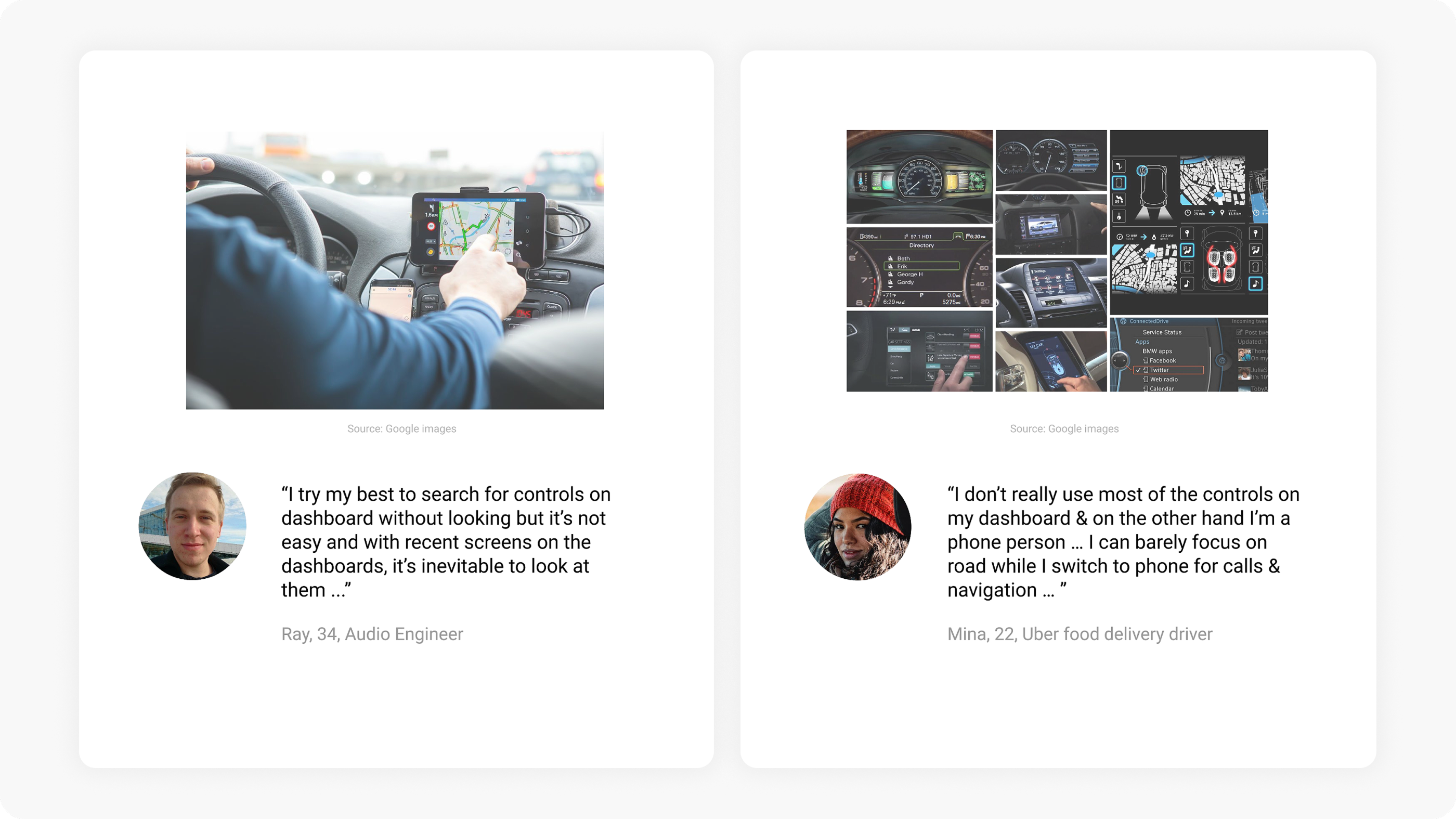
User Interviews & Shadowing
We interviewed 3 participants — colleagues and ride-sharing drivers — and observed their behavior during real drives across different scenarios.
NHTSA Guidelines & Market Analysis
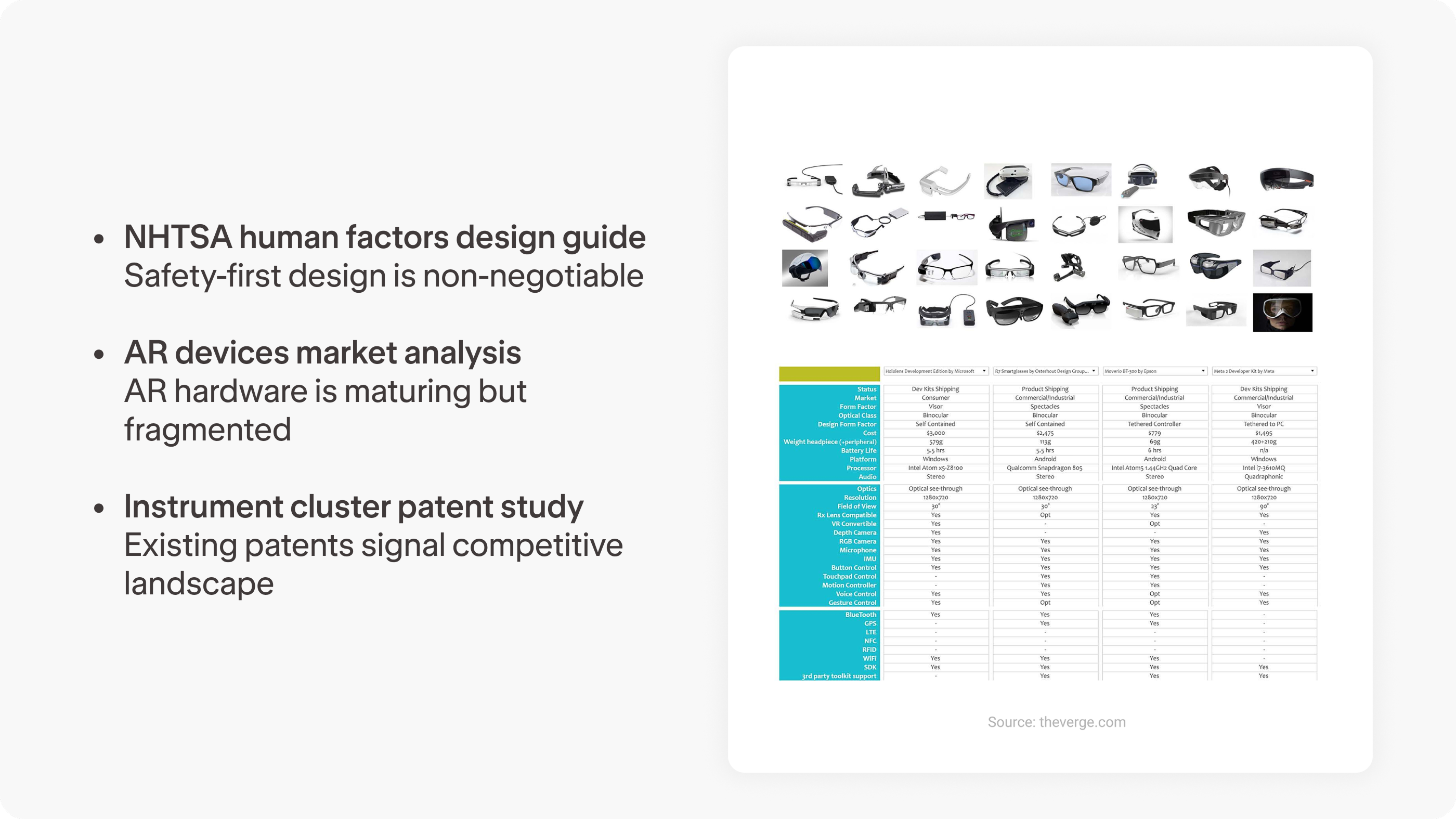
We reviewed the NHTSA human factors design guide, analyzed AR devices on the market, and studied patent documents related to automotive dashboard design.
Research Insights
High cognitive load during dashboard interaction. Drivers frequently switch between dashboard interfaces, smartphones, and real-world spatial content — creating constant mental mapping between 2D components and the 3D driving environment.
Less contextually driven instruments. With incremental feature additions to stay competitive, dashboards became more cluttered and complicated. Most drivers don’t use the majority of controls.
The Challenge
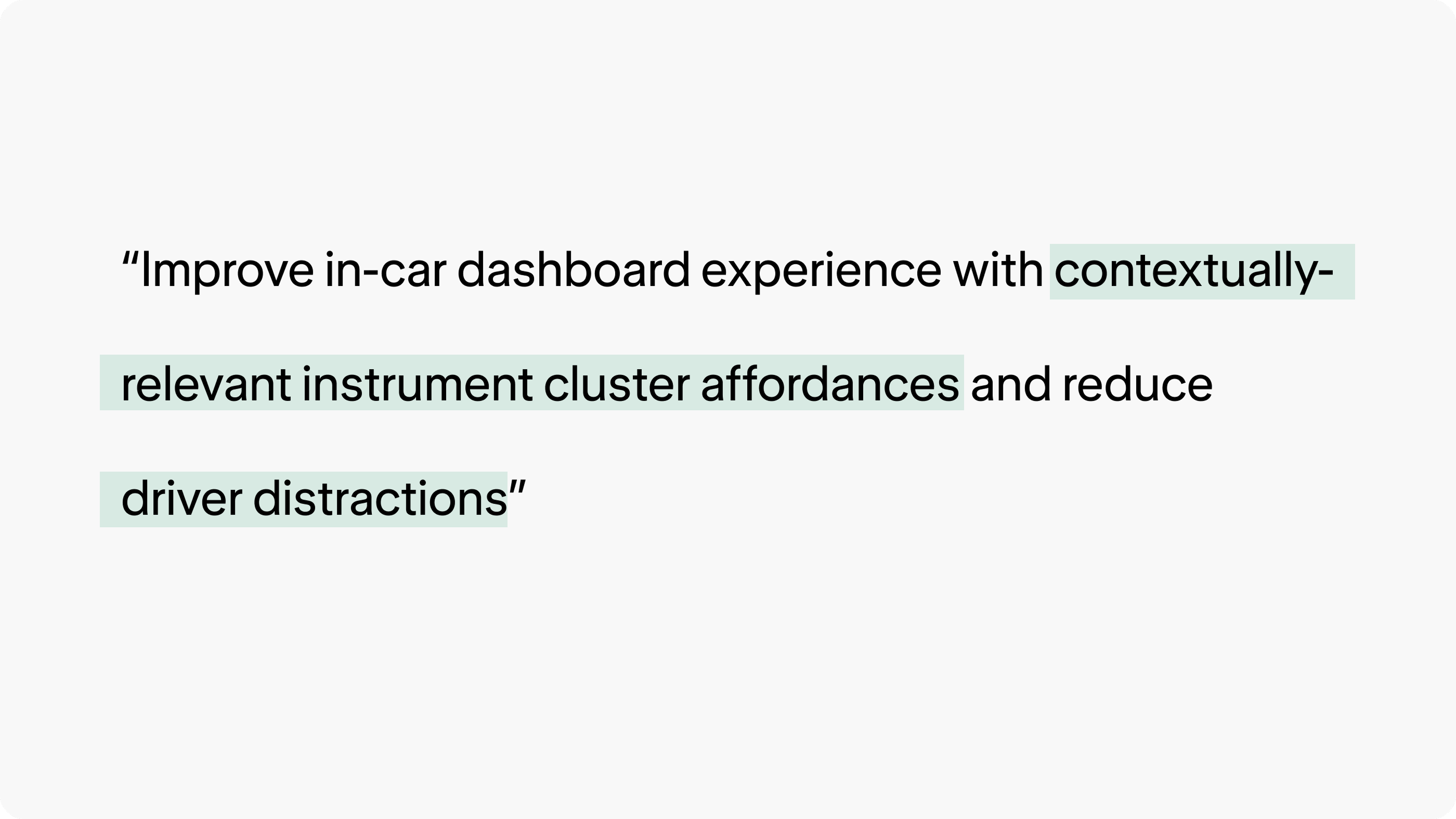
Improve the in-car dashboard experience with a contextually-driven instrument cluster and minimal driver distractions.
Ideation
Concept Generation
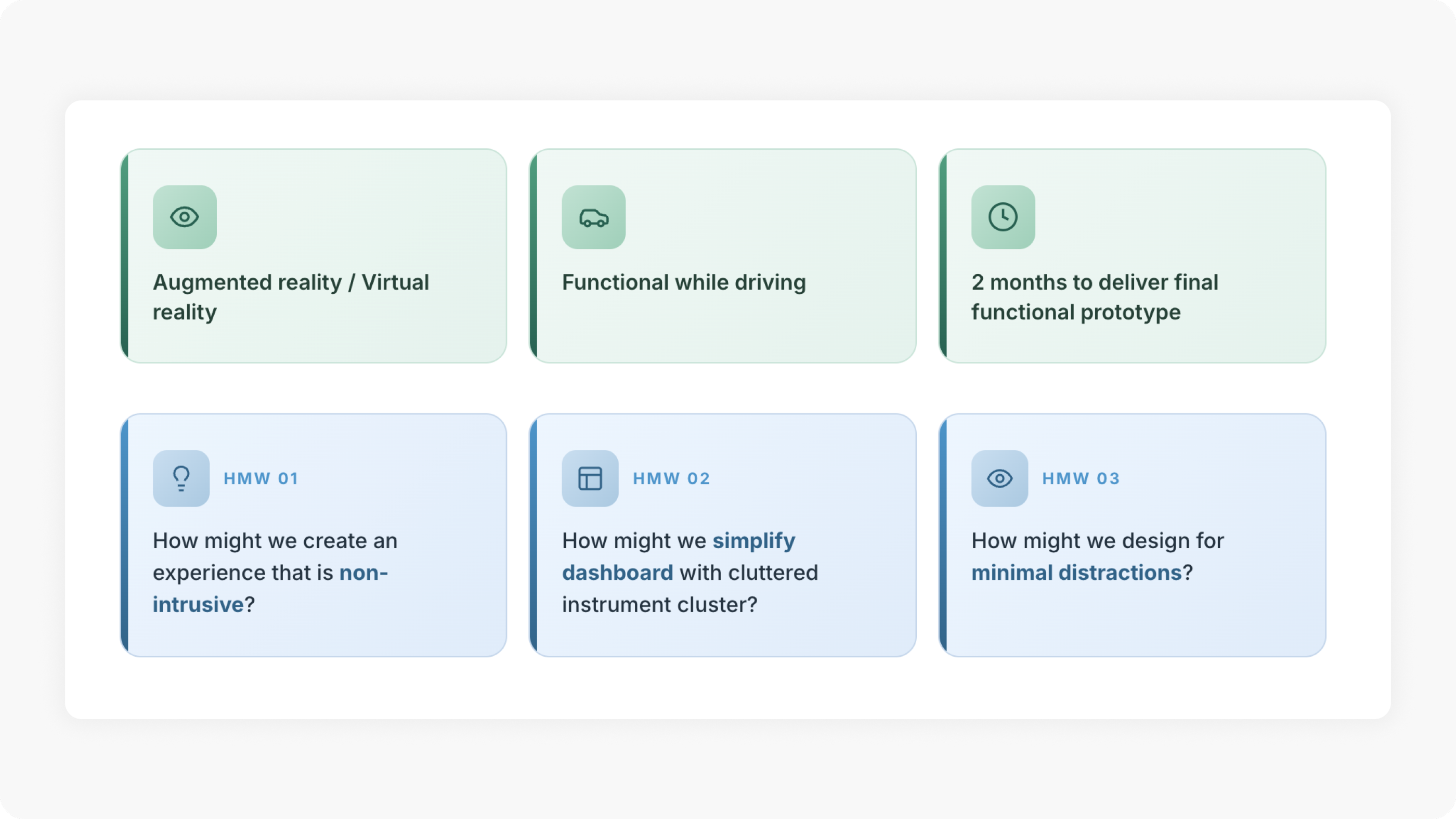
We explored concepts through “How Might We” questions — How might we create a non-intrusive experience? Simplify the cluttered cluster? Design for minimal distractions?
Initial Concepts
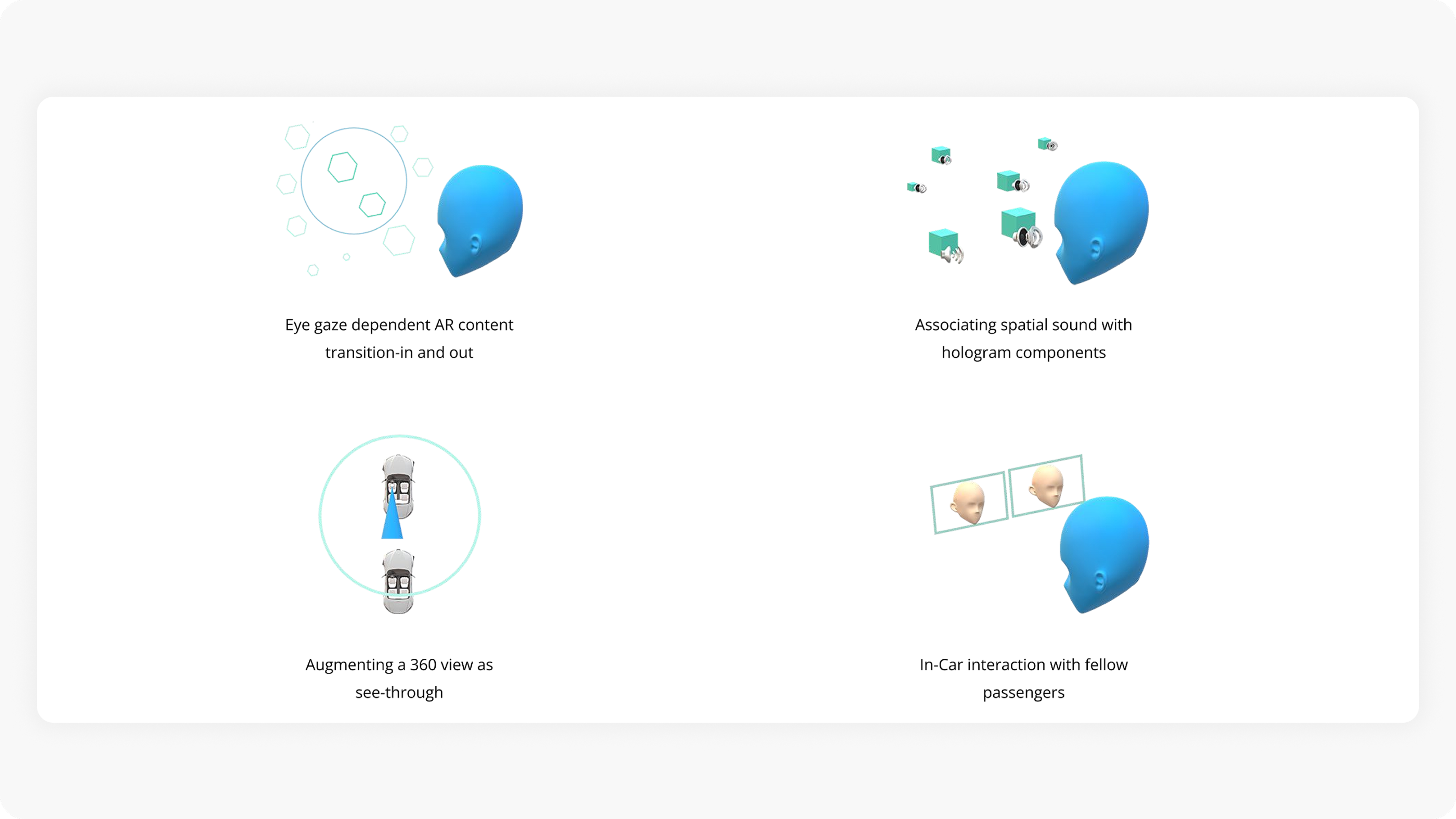
We evaluated four initial directions: eye-gaze dependent AR content transitions, spatial sound associated with hologram components, augmented 360 see-through views, and in-car passenger interaction.
Storyboards
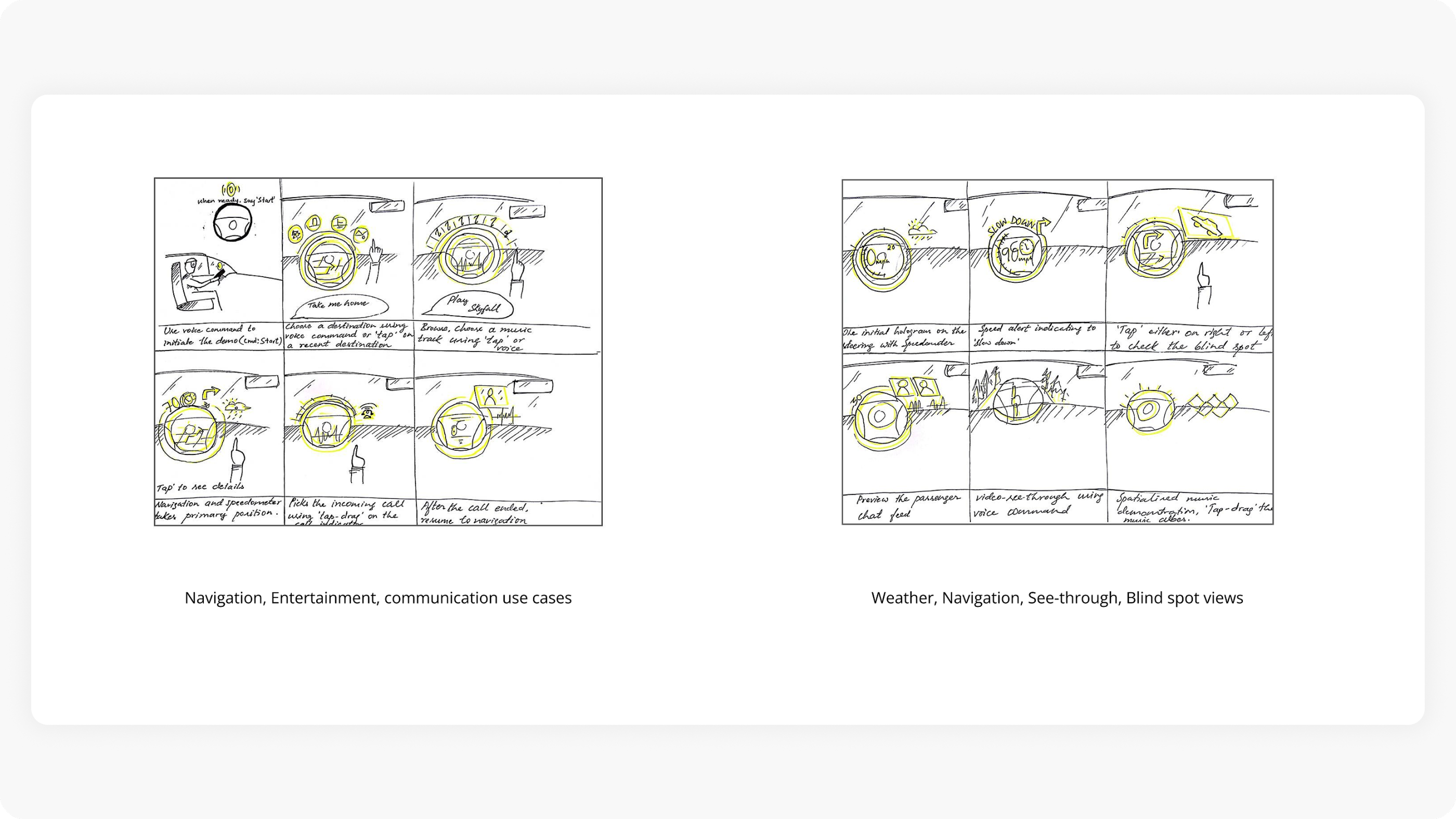
We mapped navigation, entertainment, communication, weather, and blind-spot use cases through storyboards.
Design & Prototype
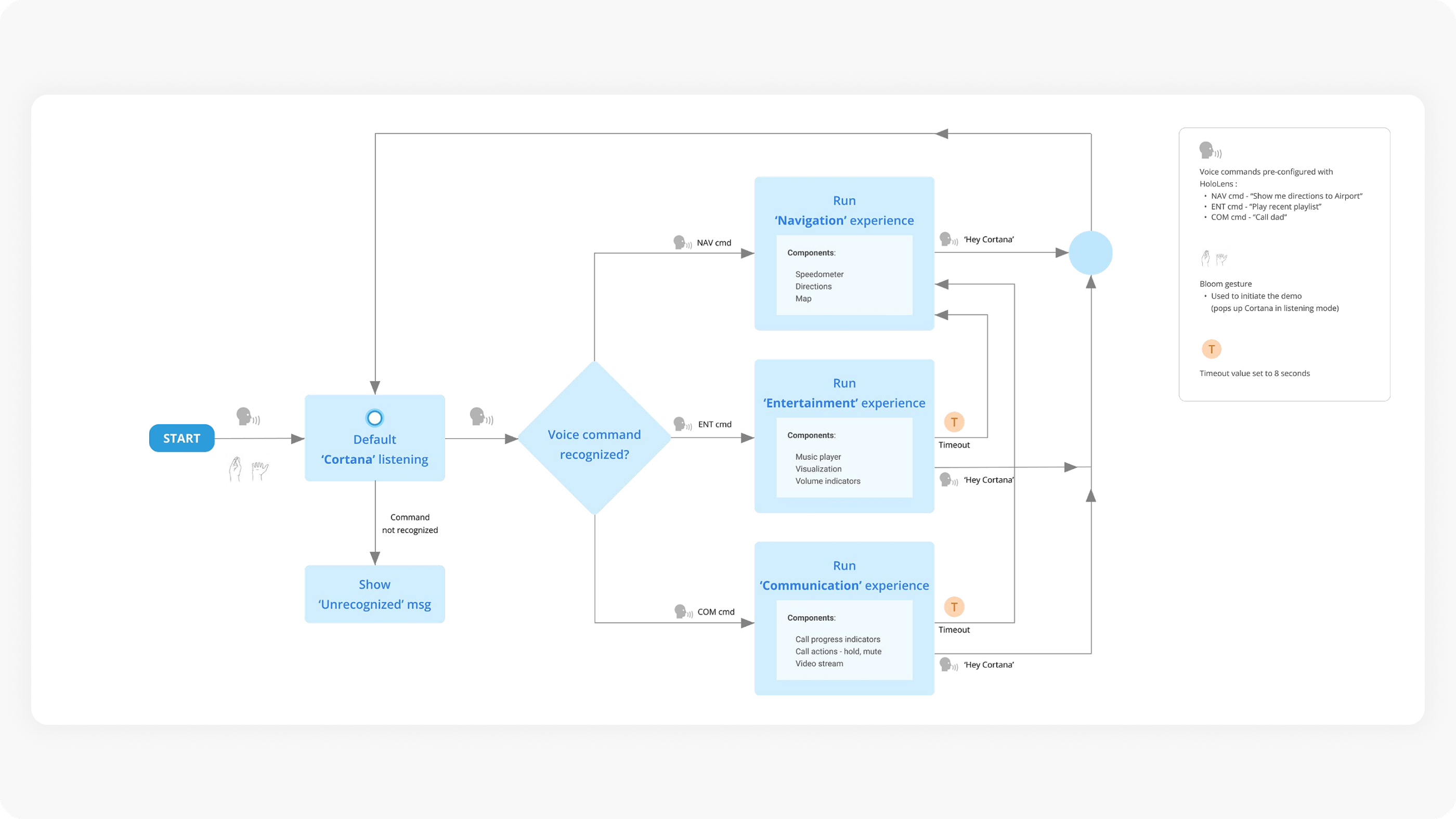
Task Flow
AR Content Architecture
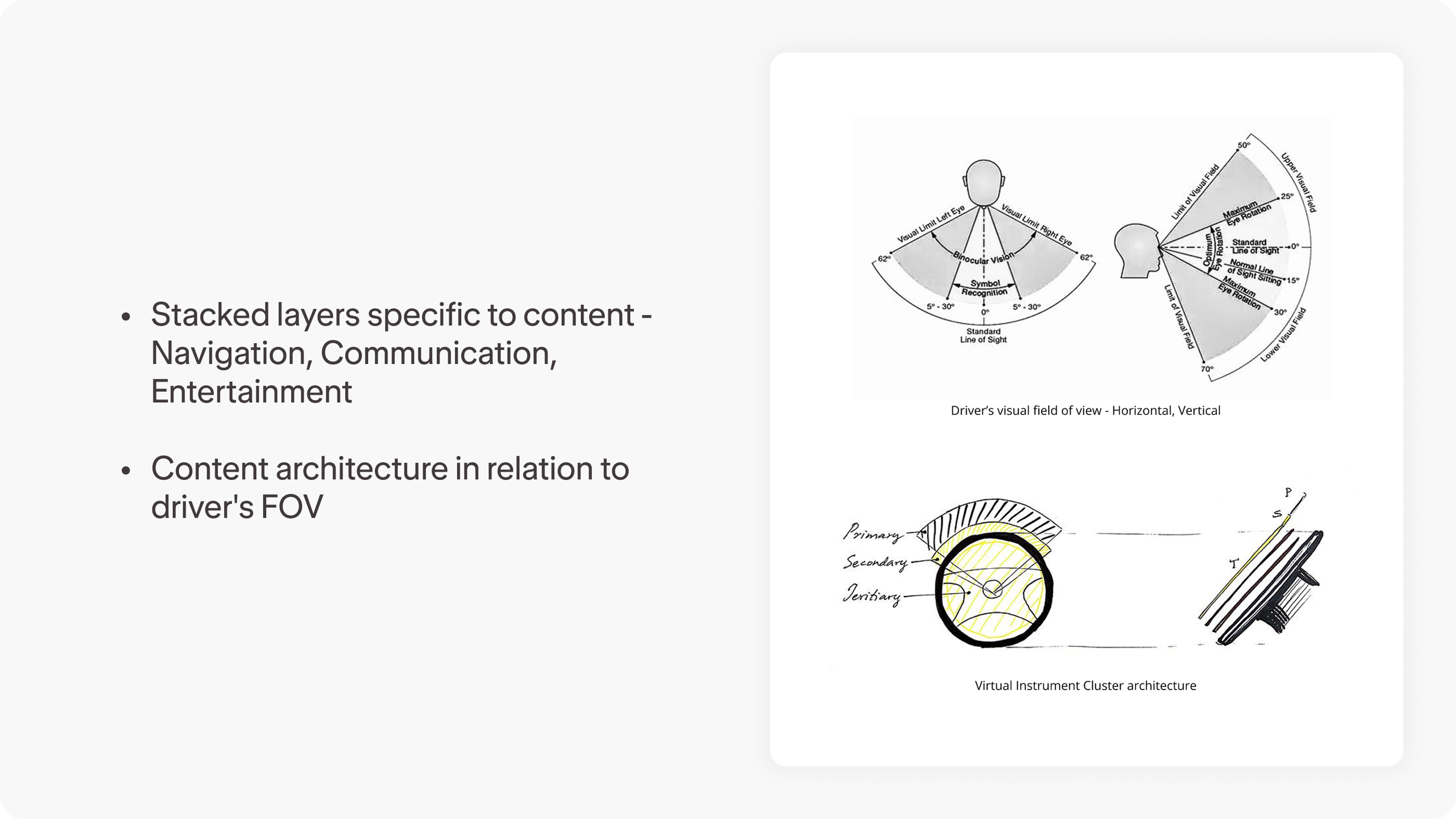
Stacked content layers — navigation, communication, entertainment — positioned relative to the driver’s field of view, based on intersection angle geometry research.
Early Feedback Using VR
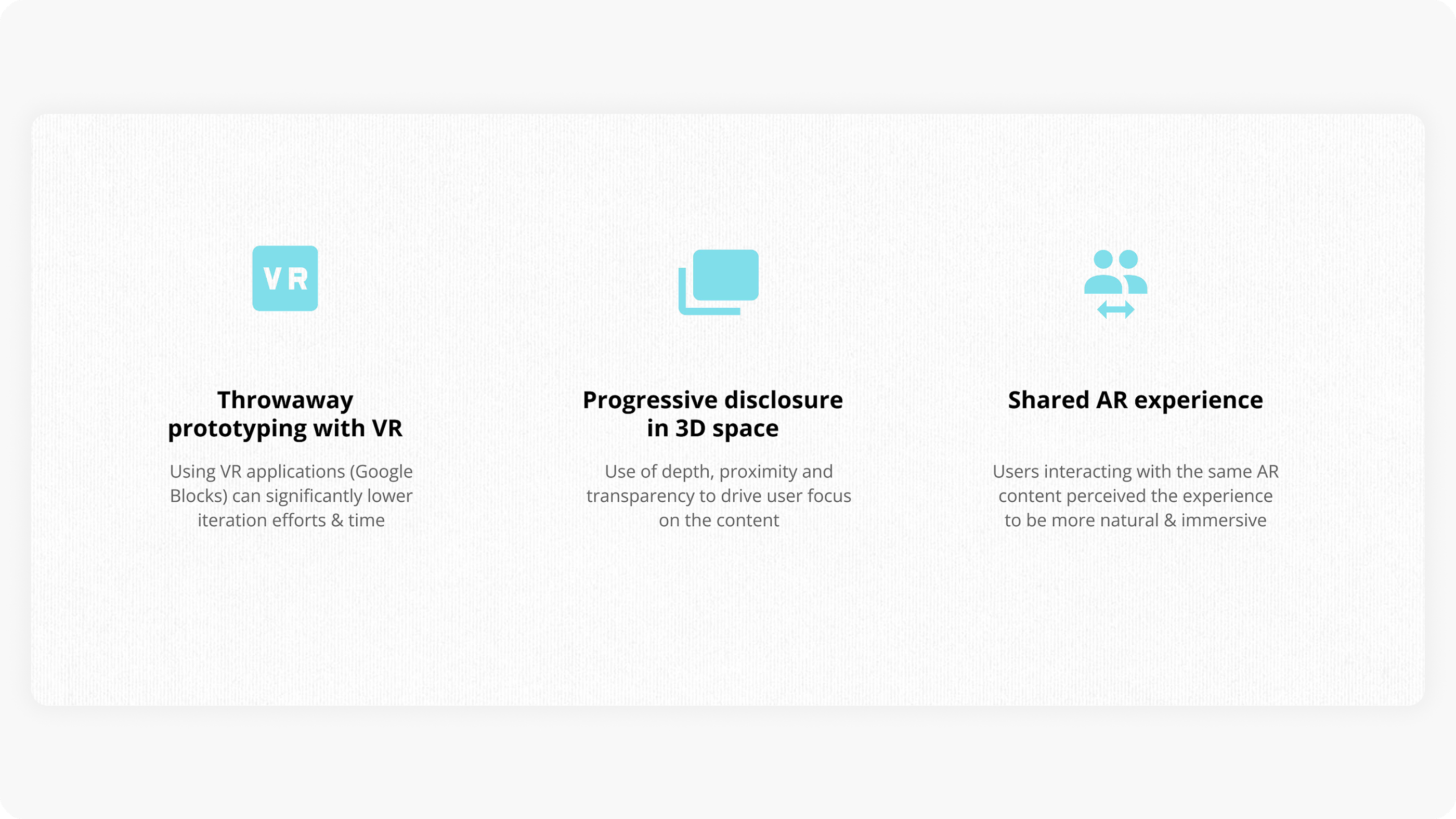
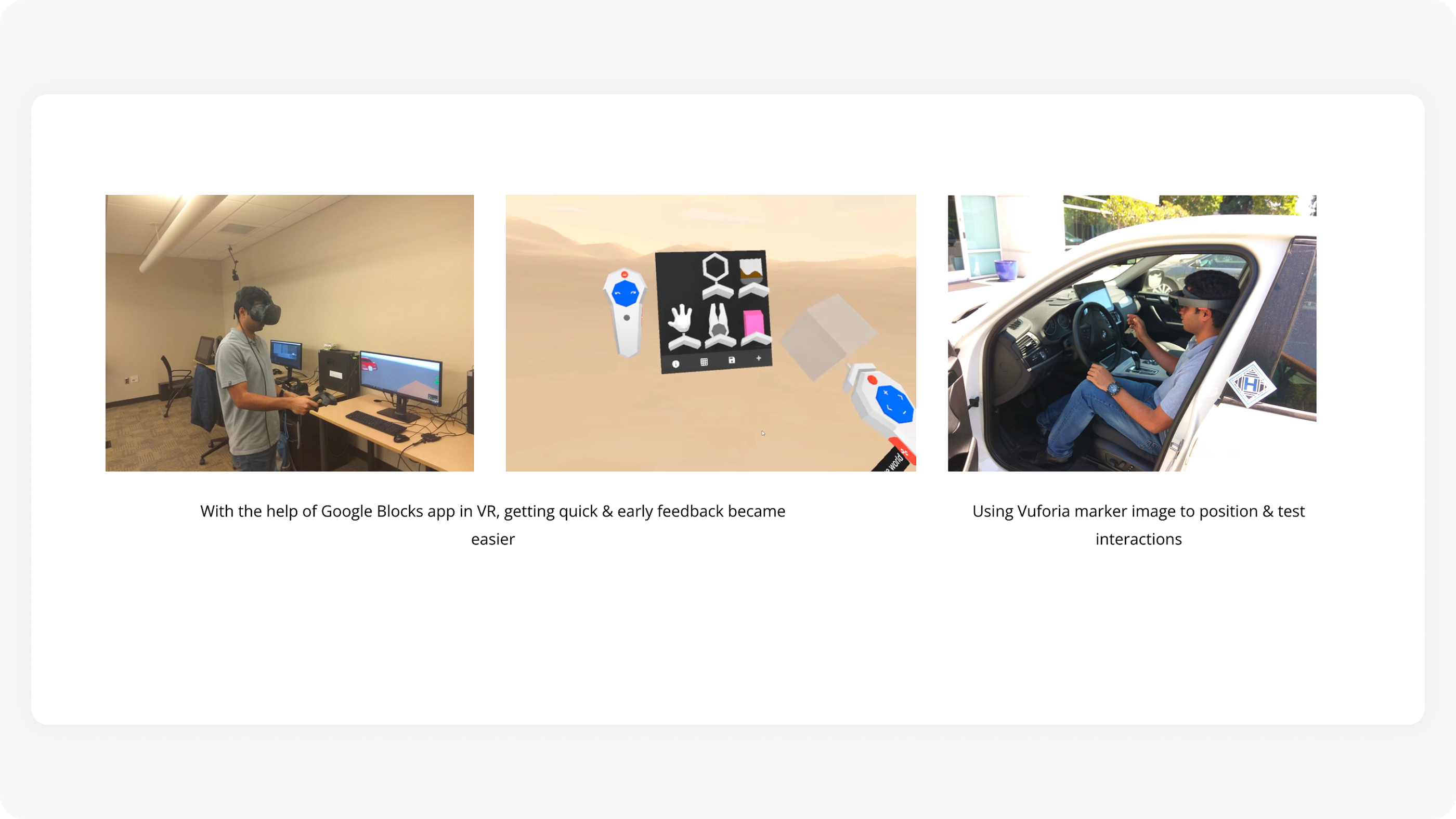
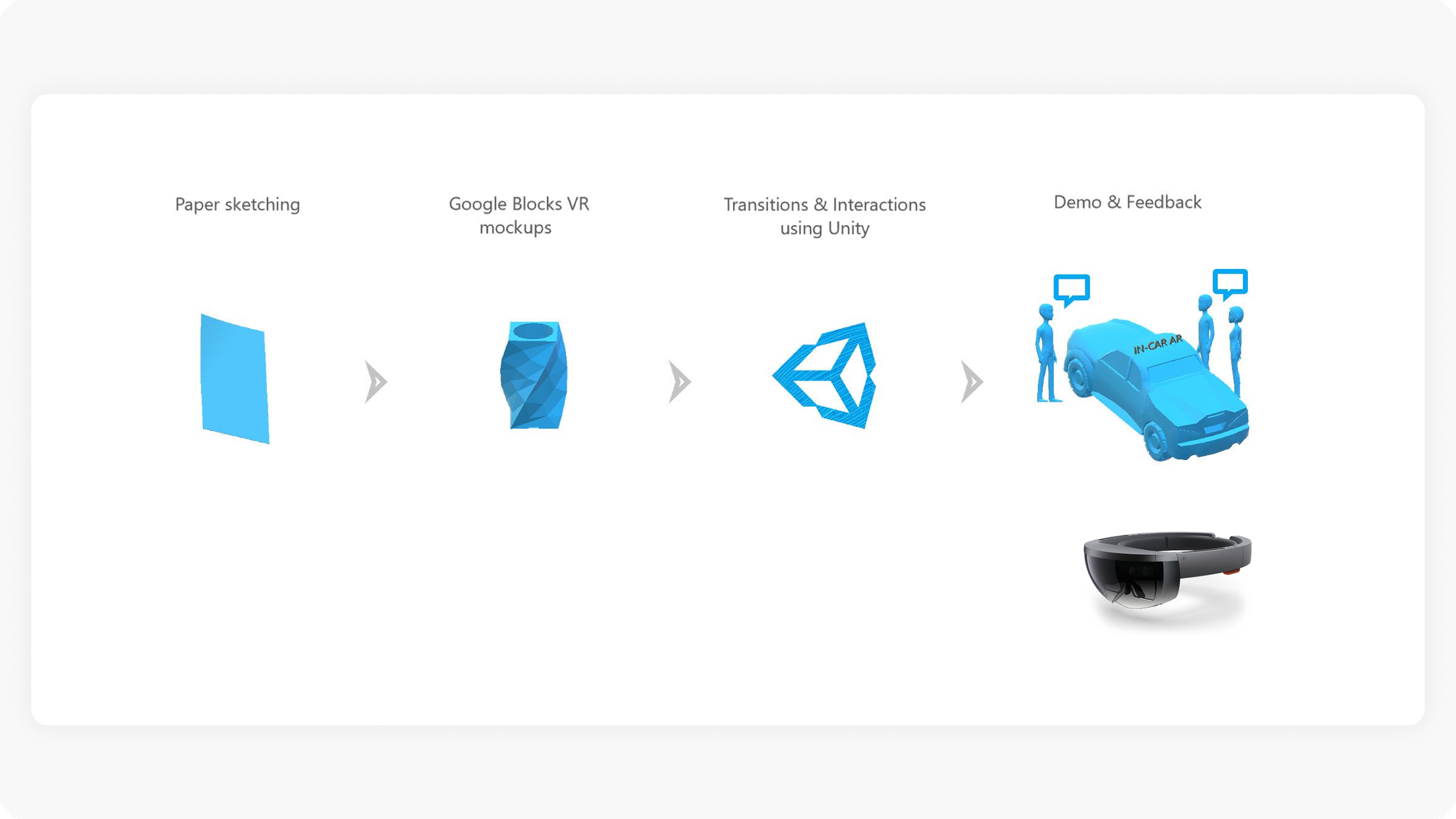
Using Google Blocks in VR and Vuforia marker images, we got quick, early feedback on spatial layout and interactions before committing to high-fidelity builds.
Prototype Iterations
Simulator Testing
We used a driving simulator to demonstrate and evaluate specific scenarios, helping validate the virtual instrument cluster under realistic constraints.
Final Experience
The shared AR Virtual Instrument Cluster — an interactive holographic experience captured using HoloLens.
Impact
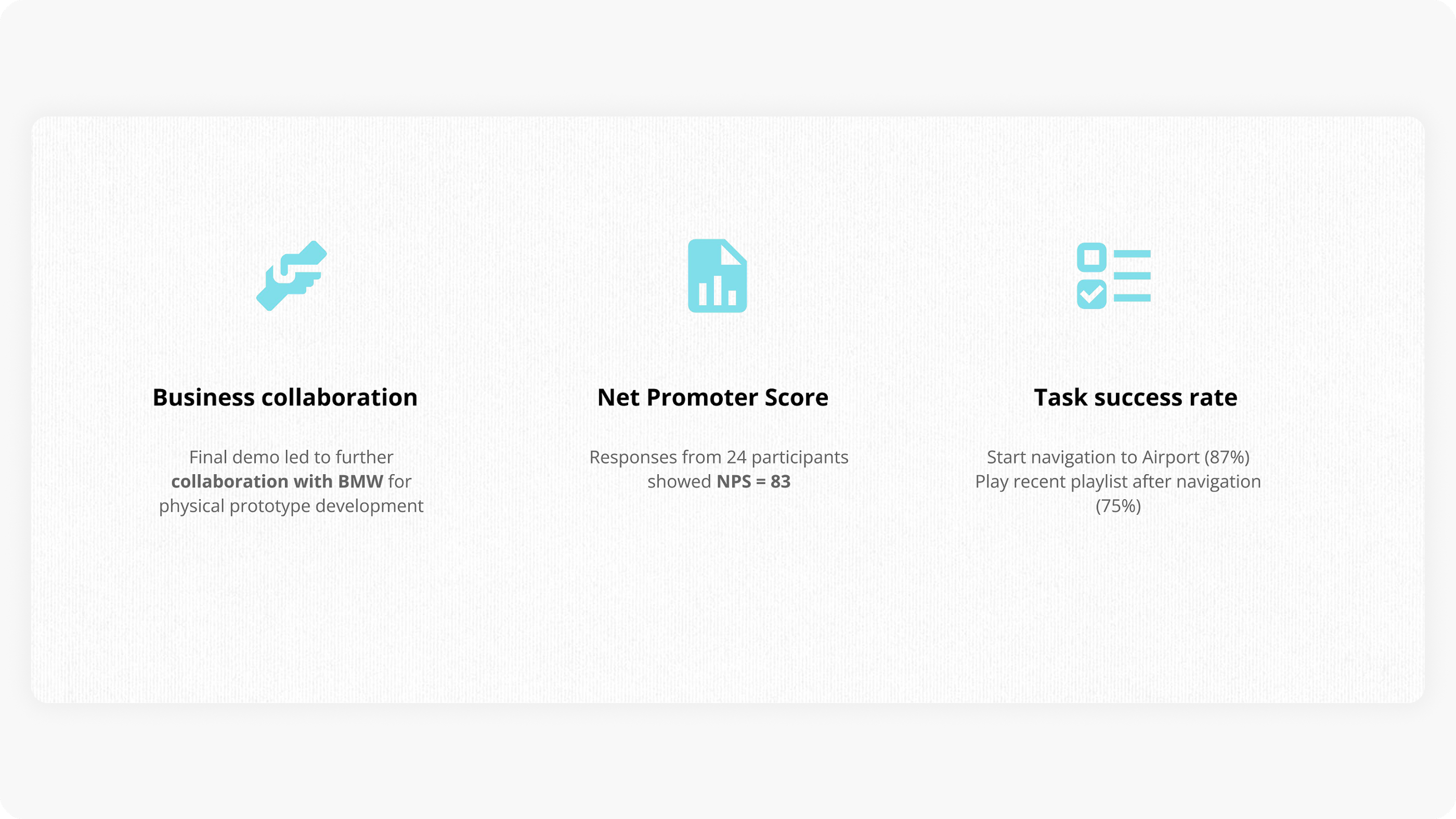
Final demo led to further collaboration with BMW for physical prototype development
Net Promoter Score from 24 participant responses
Start navigation to Airport task completion rate
Play recent playlist after navigation task completion rate
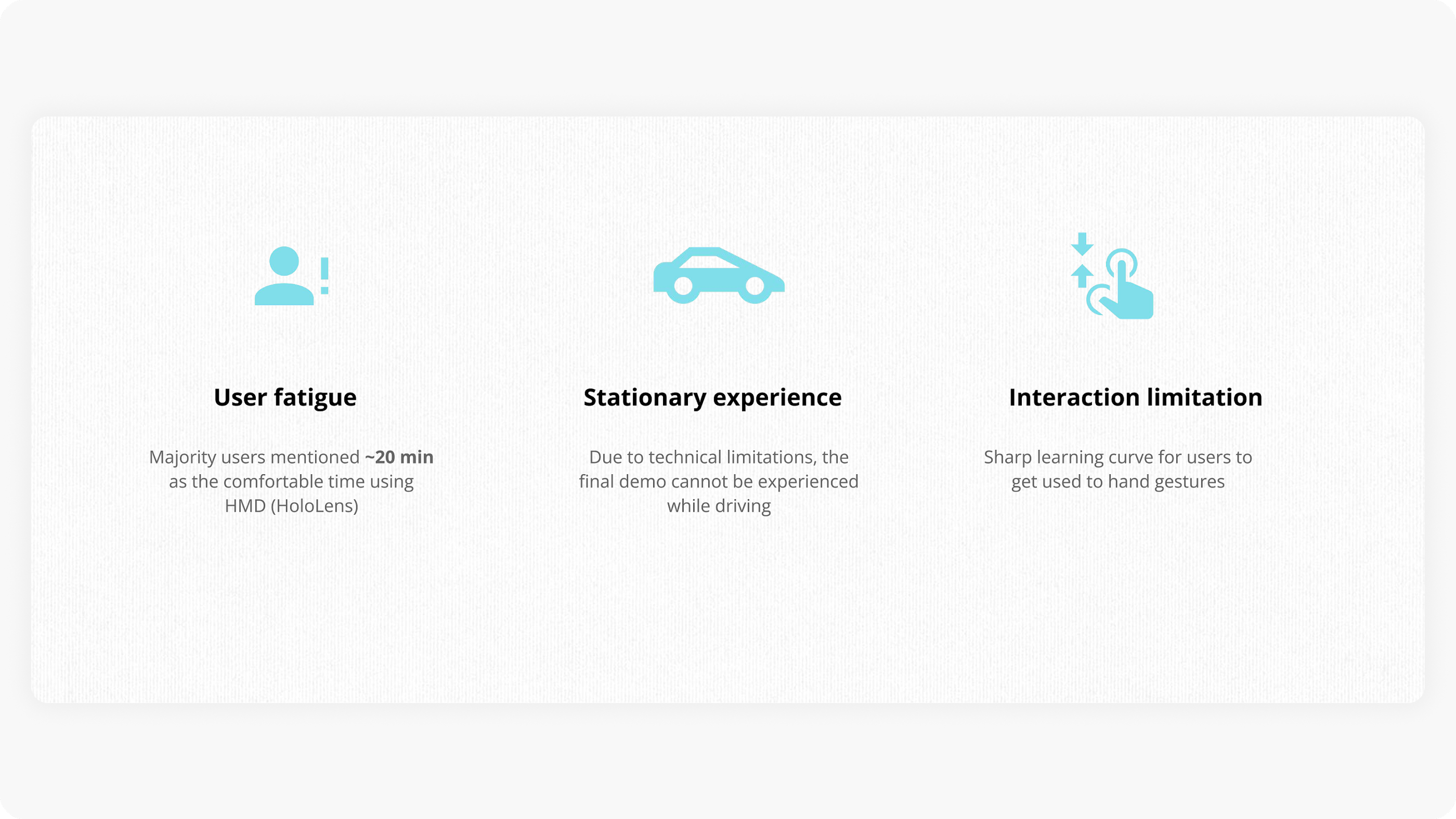
Shortcomings & Opportunities
Reflections